
Sometimes educating yourself, means unlearning untruths
Jun 26, 2026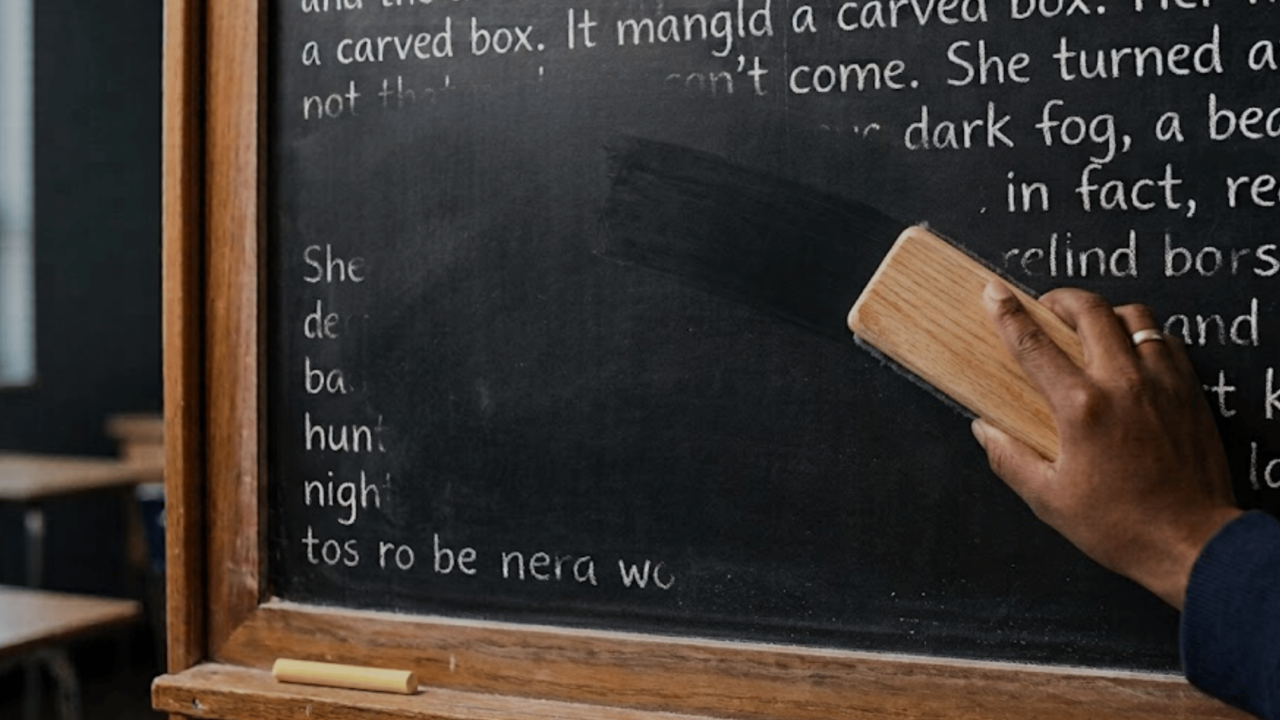
Let’s call a spade a spade: Educating yourself as you mature, often means unlearning nonsense and lies! This allows adults to feel more liberated, relaxed, and confident.
Here are my top 3 examples, that simultaneously tickle my fancy and grind my gears:
1. Birth order determines your personality – no, it doesn’t!
It sounds so logical and we believe that we see it all around us: The eldest is strong-willed and dominant, the middle child is neglected and rebellious, and the youngest is irresponsible and fun-loving.
However, the data does not support the idea that one’s place in the hierarchy of a family has lifelong effects on who you are. Scientists have studied this extensively and found no significant correlations between birth order and personality traits.
Who you are, your temperament, is inborn and genetically inherited. Your grandparents and parents contributed to your temperament in one way or another.
According to their typical traits, temperaments can be grouped together. In my Four Colour Temperament Model I call them Yappy Yellow, Raving Red, Groovy Green and Brilliant Blue. Usually, one type dominates which determines your personality.
Perhaps, whilst living with your parents as a child, you had to wear the mask of the role your environment “forced” you into. As an adult, try to discover who you were meant to be. Identify your masks and let them go if they distract you from being authentic.
Discovering your natural strengths (and weaknesses) will help you attain happiness, success, healthy relationships and fulfilment. As a parent, teacher or caretaker, allow the children in your life the same authentic expressions.
2. Grief has five stages – no, it doesn’t!
Many of us think that when grief descends upon us, we should all react in the same way. Our grief prescriptions include that it should be something that we get over fast so that we can return to work, family obligations and friendship commitments.
We expect people to “return” to who they were before and not be changed by their tragedy. This must happen to spare us the emotional discomfort of having to support others and adapt to a changed relationship.
We also have set ideas around the mourning process and expect it to proceed according to the five stages. Because these stages are documented and “feel” right, we expect ourselves and others to complete each step linearly.
Start with denial, followed by anger, then bargaining. After this, a period of depression and sadness ... But it must not last too long, because if you don’t get to acceptance soon, there is something wrong with you.
Yet, most brave souls wounded by devastating loss, speak of waves of pain that ebb and flow. Those who dare to challenge the status quo tell of how the hole in their heart remains, even after decades.
And so we consider ourselves and others failures. Why? Because we struggle to accept that human beings do not grieve in a set manner that provides us a sense of control and predictability. Yes, you can manage your reaction, but grief is beyond our control.
Even Elisabeth Kübler-Ross, who described the five stages in terms of how terminally ill patients anticipated their own deaths, lamented how her stages were misunderstood and wrongly applied. Therefore: Let go of the idea of stages!
Different people with different temperaments react to loss in many, many different ways. There is no right or wrong way. Only about 10% of grievers need treatment because they fall apart in ways that need professional intervention.
Most people find that the intensity wanes as time goes by as long as they actively deal with their feelings. But grief never truly goes away. It becomes your lifelong companion. You learn to live with and around the pain.
To heal, you need a safe, non-judgemental, non-prescriptive space. With companions prepared to sit with you in your sadness. Can you be such a grief-companion for yourself and others?
3. You must always know everything – no, you don’t!
I grew up when FOMO (Fear of Missing Out) wasn’t a thing. Before the advance of the internet there was comfort in the unknown. Some people simply knew more, and others less.
Now we live with the burden of omniscience. We suffer from decision fatigue. Having the sum of human knowledge instantly available, means you are constantly sifting through news, opinions, and data.
This hyper-connectivity forces our brains into a state of continuous partial attention, increasing stress and anxiety. We are in an “always-on” cycle. This gives us the illusion of control.
We trick ourselves into believing that watching a video about something is the same as experiencing or mastering it. This leads to shallow engagement across hundreds of topics and a constant, nagging fear that we are missing out, falling behind.
A healthier way to navigate this world is to embrace JOMO (Joy of Missing Out). Instead of trying to consume everything, actively choose what deserves your mental energy and let the rest go.
Put your brain on a “low-information diet”. Limit your consumption to deep, high-quality sources once a day rather than consuming bite-sized panic all day long.
Normalise saying “I don’t know”. Liberate yourself from the need to have an immediate opinion on everything. Saying “I haven’t looked into that enough to form an opinion” is not a sign of ignorance; it is a sign of emotional intelligence and mental maturity.
Create digital boundaries by scheduling dedicated “no-tech-now” time slots where you put your phone away. Use this time to engage with your environment, read a book, work on a hobby, or simply sit with your thoughts.
Free up some mental bandwidth to deeply understand things that truly matter to you. In this way, you get to live according to your temperament traits.
Lifelong learning that changes us for the better isn’t just about packing more facts into our heads. It’s also about having the courage to unpack the outdated baggage we’ve been dragging around.
Unlearning untruths takes a little effort and a lot of honesty. But the reward is a lighter, calmer, and full-colour life.
BECOME A PREMIUM MEMBER
Our premium membership includes all of Lynette's latest content.